






.jpg)
Audio Version: Press Play to Listen
The Conversations Shaping Healthcare AI in 2026
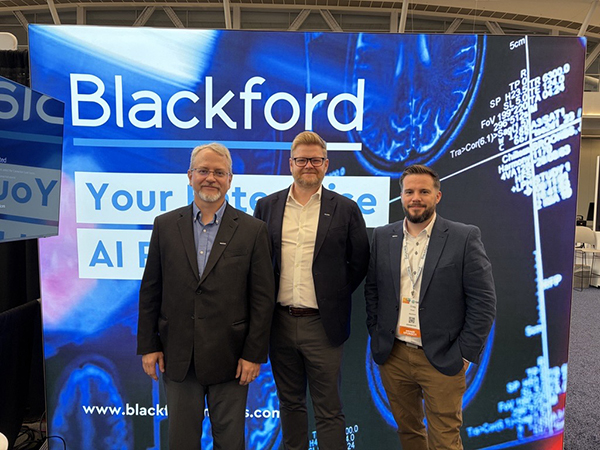
As we step into 2026, it’s inspiring to reflect on the incredible pace of change in our industry. RSNA 2025 is now behind us, and the energy and innovation we witnessed sets the stage for what promises to be a transformative year for healthcare AI.
Here are some key predictions and themes shaped by the conversations we heard at RSNA, and what they may mean for the months ahead.
A Market That’s Growing Up
RSNA 2025 reflected a market that is becoming more deliberate about where it invests time, attention and trust. Rather than being defined by a single breakthrough or headline trend, conversations pointed to multiple shifts happening in parallel.
“There isn’t a single headline trend anymore, what we’re seeing instead is a market where lots of things are moving at once, and that’s usually a sign of maturity rather than confusion.”
Chris Meenan, Chief Product Officer,
This sense of a market moving with greater intent underpins many of the expectations for 2026.
“The industry is moving out of experimentation and into decision-making, it’s measured and much more intentional.”
Bertrand Frossard, VP Partnerships,
The AI Platform Market Will Continue to Accelerate
Health system leaders are increasingly adopting centralised platform strategies to integrate AI into clinical workflows. As individual AI models deliver more clinical value, organisations are looking for approaches that simplify deployment complexity and minimise support costs for adopting multiple apps.
At RSNA, it was impossible to avoid the word platform, but it was equally clear that it meant very different things depending on who you spoke to. Some vendors were using it to describe tightly closed ecosystems, while others were talking about enterprise-level approaches built around interoperability, workflow integration and scale.
The distinction matters far more now than it did even a few years ago.
“There are several platforms in the market, but what a platform actually means isn’t always clear. The difference between a closed ecosystem and something that genuinely works at enterprise level really matters as organisations start thinking about scale.”
Mary Hoxworth, VP Product Management.
That view was echoed in conversations about buyer expectations. Hospitals are increasingly wary of fragmented approaches and overlapping integrations.
“Calling something a platform doesn’t make the complexity go away. From a hospital perspective, it often just moves it somewhere else. What people actually want is fewer integrations and clearer accountability.”
Chris Meenan, Chief Product Officer
Building a platform is increasingly understood as a long-term commitment rather than a technical checkbox. Operating reliably at scale requires ongoing work, from security and governance to deployment flexibility and partner support, and sustained investment over time. As organisations plan for broader, enterprise-wide adoption, these factors are becoming central to how platform strategies are evaluated.
From a partner-facing perspective, this reinforces the importance of being clear about what orchestration actually involves, and why it matters. As platform approaches continue to accelerate, clearer definitions and realistic expectations will play an important role in supporting confidence and alignment across customers, vendors and partners in the year ahead.
Trust Matters More Than Ever
Strong partnerships and proven solutions at scale are becoming increasingly important as AI adoption grows. Trust is achieved through transparency, reliability and meaningful engagement across the ecosystem.
At RSNA, trust was discussed not as a message, but as something demonstrated through consistency, collaboration and behaviour over time. Conversations across customers, partners and platform stakeholders reinforced the importance of long-term confidence rather than short-term proof points.
This emphasis on trust reflects broader expectations for 2026, where confidence will be evaluated not only at procurement, but throughout deployment and ongoing use.
Clinical Workflow Comes First
AI has the potential to transform healthcare, but its purpose remains grounded in improving outcomes and streamlining workflows. As organisations look ahead to broader adoption in 2026, workflow fit is increasingly emerging as the deciding factor between solutions that scale and those that stall.
Across conversations at RSNA, one principle held consistently: AI must fit the workflow. Systems that pull clinicians out of their existing environments were widely seen as adding friction, while AI that sits quietly within established workflows was viewed as far more likely to be adopted and relied upon.
“The most effective and successful solutions seamlessly fit into the clinical workflow, supporting clinicians’ decisions, not interrupting them.”
James Holroyd, Managing Director
This same perspective continues to shape how emerging technologies are being approached. Interest in generative AI, particularly in reporting, is increasingly framed through a workflow lens. While the potential is clear, there remains a strong emphasis on guardrails, traceability and maintaining a clear separation between AI-generated content and human judgement.
From a practical standpoint, reporting efficiency continues to stand out as one of the most tangible near-term opportunities. Improvements in this area are measurable, closely aligned with clinical priorities, and easier to integrate into existing workflows without disruption.
These perspectives help explain why workflow alignment is expected to remain central in 2026. Health systems are increasingly prioritising solutions that integrate seamlessly into existing clinical environments and support clinicians without adding friction.
Data Must Lead to Action
As AI becomes more embedded in clinical workflows, the volume and variety of outputs continues to grow. Some applications generate rich data, others very little, and much of it remains inconsistent or siloed. As organisations look ahead to broader adoption in 2026, making that information usable, and trustworthy, is becoming increasingly important.
This challenge is particularly visible as health systems attempt to scale AI responsibly. Disparate outputs and inconsistent data structures make it harder to aggregate, contextualise and act on information across tools and workflows.
“AI outputs are varied and often inconsistent. A platform has a real role in helping standardize AI data, making it accessible and meaningful.”
Mary Hoxworth, VP Product Management
However, collecting and analysing data is only part of the story. As expectations mature, the focus is shifting toward whether insight actually leads to action, whether it changes workflows, supports decision-making, or improves outcomes.
Looking ahead, the emphasis is shifting from the volume of AI data produced to the decisions it enables. As AI becomes part of everyday clinical infrastructure, platforms that help organizations interpret, act on and learn from data are expected to play an increasingly important role in sustaining confidence and long-term value.
Enterprise Is More Than a Buzzword
As the healthcare AI market continues to mature, the meaning of enterprise is becoming more concrete, and more demanding. Organisations are increasingly clear that deploying AI at scale requires more than individual tools or point solutions; it requires platforms designed to operate reliably within complex enterprise environments.
This expectation was evident across discussions around platforms, data, workflow and trust. As adoption expands beyond pilots, health systems are placing greater emphasis on capabilities that support long-term operation at scale. Enterprise readiness is no longer assumed; it is being actively evaluated.
In practice, enterprise expectations are becoming more clearly defined. These increasingly include:
- Robust IT security and governance
- Advanced analytics and interoperability across systems and workflows
- Support for regulatory and operational requirements
- Flexibility to support custom or internally developed AI models, alongside third-party applications
For many organisations, this marks a shift away from fragmented approaches toward solutions that can integrate cleanly into existing infrastructure. Expectations now extend beyond model performance to include how AI operates day to day within established enterprise environments.
These enterprise requirements are closely linked to cost and sustainability. As AI becomes embedded across multiple workflows and departments, platforms that reduce operational complexity and total cost of ownership, while delivering measurable, enterprise-wide improvements, are expected to be favoured. The focus is moving from experimentation to infrastructure: solutions that can be trusted, supported and evolved over time.
“In 2026, enterprise is less a label and more a test. Platforms will be judged on their ability to meet the realities of large-scale healthcare environments, not just in theory, but in day-to-day operation.”
James Holroyd, Managing Director
2026 Will Be the Year of the Multi-App Reality
As early AI use cases are successfully deployed, healthcare organisations gain confidence and practical experience. These initial wins help establish best practices and enable expansion across additional applications.
At RSNA, this multi-app reality was evident in discussions around orchestration, governance and the need to manage multiple AI tools coherently. Rather than isolated deployments, conversations focused on how platforms can support coordination, oversight and sustained value over time.
Experience, not experimentation, is expected to drive success and future adoption.
The Human Side of Progress
Alongside technical and operational discussions, RSNA also highlighted the importance of relationships across the wider ecosystem. Many of the most valuable conversations were not about individual products, but about continuity, shared understanding and collaboration between customers, partners and platform stakeholders.
These interactions were seen as essential to progressing AI adoption in practice and reinforcing confidence across the ecosystem.
Looking Ahead
Taken together, the conversations at RSNA and the expectations for 2026 point to a market focused less on novelty and more on delivery. Platforms, trust, workflow alignment and actionable insight are no longer emerging ideas, they are becoming defining requirements.
As the industry moves forward, the conversations shaping 2026 are already well underway, centred on what can be delivered, trusted and sustained over time.